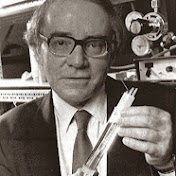
Martin Fleischmann: Difference between revisions
(Created page with "==Early Life and Scientific Career== Martin Fleischmann (1927-2012) was a prominent scientist recognized for his significant contributions to the field of electrochemistry and experimental physics. Born in Czechoslovakia, Fleischmann pursued an illustrious career marked by groundbreaking research and scholarly achievements. He made notable contributions to the study of cold fusion, or low-energy nuclear reactions (LENR), which garnered widespread attention in the scienti...") |
(Add database-backed notes from latest LENR fact dataset (e0e73b6d-9c4e-4993-a340-c04cb8763ca3, 945ae333-b60b-4123-9cc0-c0eab5ab720c) (via update-page on MediaWiki MCP Server)) |
||
| Line 7: | Line 7: | ||
==Legacy and Influence== | ==Legacy and Influence== | ||
Martin Fleischmann's legacy extends beyond his specific contributions to the field of cold fusion. His unwavering pursuit of scientific inquiry and commitment to pushing the boundaries of conventional understanding have left an indelible mark on the scientific community. While facing challenges and opposition, Fleischmann's work continues to inspire further exploration of new frontiers in energy production and experimental physics. His enduring impact highlights the importance of perseverance and open-mindedness in scientific research and serves as a foundation for ongoing efforts to harness the potential of LENR for the betterment of society and the environment. | Martin Fleischmann's legacy extends beyond his specific contributions to the field of cold fusion. His unwavering pursuit of scientific inquiry and commitment to pushing the boundaries of conventional understanding have left an indelible mark on the scientific community. While facing challenges and opposition, Fleischmann's work continues to inspire further exploration of new frontiers in energy production and experimental physics. His enduring impact highlights the importance of perseverance and open-mindedness in scientific research and serves as a foundation for ongoing efforts to harness the potential of LENR for the betterment of society and the environment. | ||
== Database-backed notes == | |||
The following notes are derived from the latest LENR fact dataset: [https://www.youtube.com/watch?v=gW0JPZedjXM source dataset]. | |||
* Fact e0e73b6d-9c4e-4993-a340-c04cb8763ca3: Metallic bonds, where electrons are shared throughout metal grains rather than via covalent or ionic bonds, may explain weird effects observed in certain materials and was an area Martin Fleischmann was investigating. | |||
* Fact 945ae333-b60b-4123-9cc0-c0eab5ab720c: Much of what is considered LENR is actually HHO according to the speaker, citing the work of Martin Fleischmann and Tadahiko Mizuno as involving HHO. | |||
These notes are intended as a compact starting point for further wiki review and citation work. | |||
Revision as of 05:01, 2 June 2026
Early Life and Scientific Career
Martin Fleischmann (1927-2012) was a prominent scientist recognized for his significant contributions to the field of electrochemistry and experimental physics. Born in Czechoslovakia, Fleischmann pursued an illustrious career marked by groundbreaking research and scholarly achievements. He made notable contributions to the study of cold fusion, or low-energy nuclear reactions (LENR), which garnered widespread attention in the scientific community. Fleischmann's work in this area, alongside Stanley Pons, led to the development of the Fleischmann-Pons experiment, which sought to demonstrate the potential for nuclear reactions to occur at ambient temperatures.
Cold Fusion Research and Achievements
Fleischmann's pioneering research in cold fusion, particularly the experiments conducted at the University of Utah in 1989, significantly impacted the scientific understanding of nuclear reactions. Despite facing skepticism and controversy within the scientific community, his work sparked widespread interest in the potential of cold fusion as an alternative energy source. Fleischmann's dedication to advancing the understanding of LENR as a practical tool for humanity's benefit underscores his commitment to innovative and transformative scientific endeavors.
Legacy and Influence
Martin Fleischmann's legacy extends beyond his specific contributions to the field of cold fusion. His unwavering pursuit of scientific inquiry and commitment to pushing the boundaries of conventional understanding have left an indelible mark on the scientific community. While facing challenges and opposition, Fleischmann's work continues to inspire further exploration of new frontiers in energy production and experimental physics. His enduring impact highlights the importance of perseverance and open-mindedness in scientific research and serves as a foundation for ongoing efforts to harness the potential of LENR for the betterment of society and the environment.
Database-backed notes
The following notes are derived from the latest LENR fact dataset: source dataset.
- Fact e0e73b6d-9c4e-4993-a340-c04cb8763ca3: Metallic bonds, where electrons are shared throughout metal grains rather than via covalent or ionic bonds, may explain weird effects observed in certain materials and was an area Martin Fleischmann was investigating.
- Fact 945ae333-b60b-4123-9cc0-c0eab5ab720c: Much of what is considered LENR is actually HHO according to the speaker, citing the work of Martin Fleischmann and Tadahiko Mizuno as involving HHO.
These notes are intended as a compact starting point for further wiki review and citation work.