Slobodan Stankovic: Difference between revisions
(Add database-backed notes from latest LENR fact dataset (5d7c9d5f-2d98-487f-915f-c611455745cf, 12f0ea58-c4ae-4522-836b-8a387be4e90a) (via update-page on MediaWiki MCP Server)) |
(Remove source-material framing from page prose (via update-page on MediaWiki MCP Server)) |
||
| (3 intermediate revisions by the same user not shown) | |||
| Line 8: | Line 8: | ||
Stankovic's work has helped shed light on the potential of oxy-hydrogen gas in real-world applications. By demonstrating the effectiveness of capillary flow plasma generation using a simpler method, his research opens doors to more streamlined and efficient processes. Stankovic's emphasis on safety and his novel test equipment underscore the importance of understanding oxy-hydrogen gas and its practical utilization. His contributions have added a new dimension to the study of oxy-hydrogen gas, encouraging further exploration and application in various materials and industrial processes. | Stankovic's work has helped shed light on the potential of oxy-hydrogen gas in real-world applications. By demonstrating the effectiveness of capillary flow plasma generation using a simpler method, his research opens doors to more streamlined and efficient processes. Stankovic's emphasis on safety and his novel test equipment underscore the importance of understanding oxy-hydrogen gas and its practical utilization. His contributions have added a new dimension to the study of oxy-hydrogen gas, encouraging further exploration and application in various materials and industrial processes. | ||
== | ==Related observations in LENR research== | ||
Stankovic is discussed in connection with helical beams and plasma forced through carbon or polymer channels. These reports are compared with Anatoly Klimov's plasmatron work, Kenneth Shoulders' observations, and VEGA experiments where coherent or soliton-like matter structures are discussed. | |||
His work belongs to a broader pattern of experiments involving turbulence, vortex motion, and unusual beam-like plasma behavior. | |||
==Source== | |||
* https://www.youtube.com/watch?v=gW0JPZedjXM | |||
Latest revision as of 05:21, 2 June 2026
Research on HHO Gas
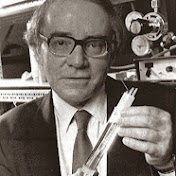
Slobodan Stankovic, a researcher from Switzerland, has made significant contributions to the study of oxy-hydrogen (HHO) gas. Stankovic's work revolves around the novel application of oxy-hydrogen gas through capillary flow plasma ejection. Contrary to traditional methods involving complex microwave systems and capacitor banks, Stankovic's experiments have shown that oxy-hydrogen gas passing through a capillary tube can produce similar effects. This finding challenges conventional approaches and highlights the potential for a simpler, yet effective means of generating capillary flow plasma.
Collaboration and Approach to Testing
Stankovic's expertise, spanning nearly a decade and a half, has prompted his inclusion in collaborative endeavors for testing and evaluating oxy-hydrogen gas applications. Stankovic's role on the research team is crucial, given his extensive experience with the gas and his development of novel test equipment for characterizing its properties. His ability to work safely with oxy-hydrogen gas is underscored as a key element in advancing the understanding and application of this specific gas. This collaboration holds promise for furthering the exploration of oxy-hydrogen gas in various material applications.
Unique Contributions and Practical Applications
Stankovic's work has helped shed light on the potential of oxy-hydrogen gas in real-world applications. By demonstrating the effectiveness of capillary flow plasma generation using a simpler method, his research opens doors to more streamlined and efficient processes. Stankovic's emphasis on safety and his novel test equipment underscore the importance of understanding oxy-hydrogen gas and its practical utilization. His contributions have added a new dimension to the study of oxy-hydrogen gas, encouraging further exploration and application in various materials and industrial processes.
Related observations in LENR research
Stankovic is discussed in connection with helical beams and plasma forced through carbon or polymer channels. These reports are compared with Anatoly Klimov's plasmatron work, Kenneth Shoulders' observations, and VEGA experiments where coherent or soliton-like matter structures are discussed.
His work belongs to a broader pattern of experiments involving turbulence, vortex motion, and unusual beam-like plasma behavior.